
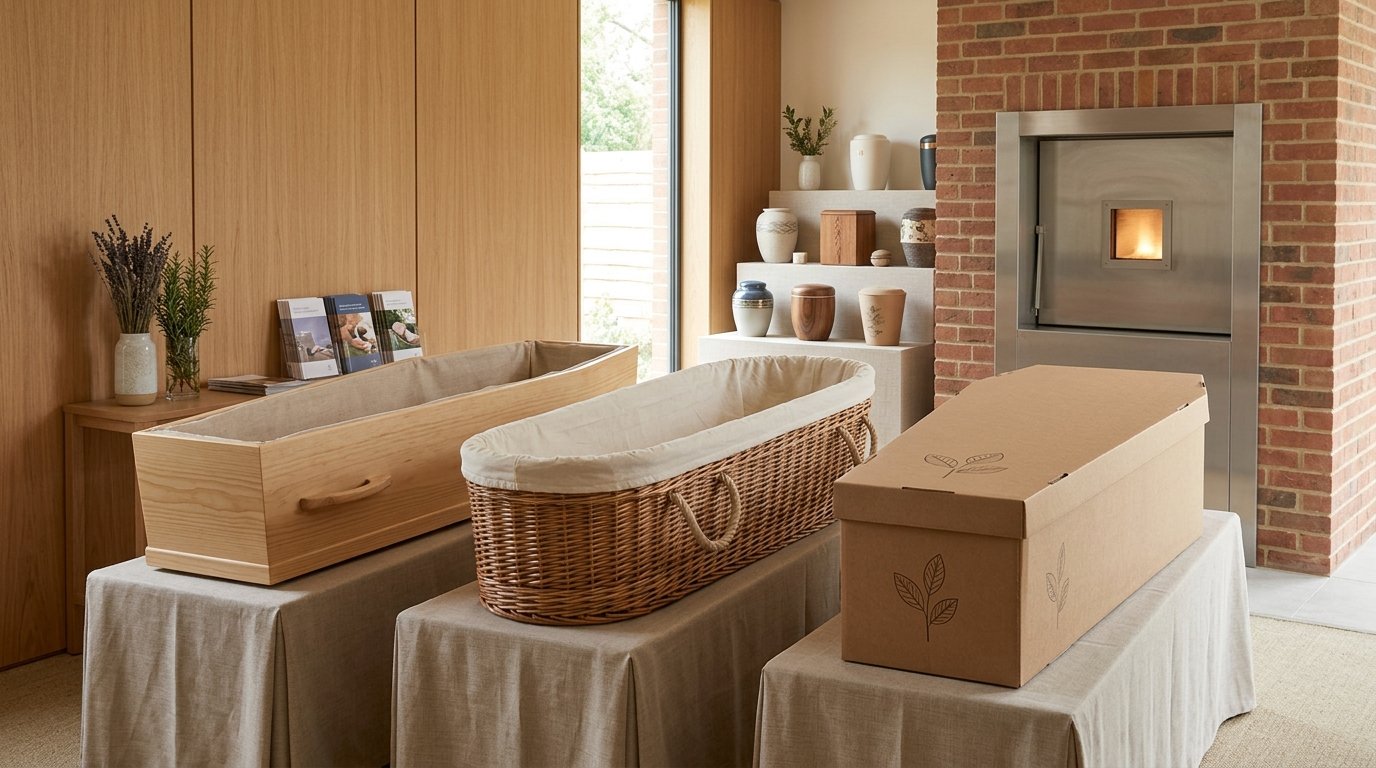
The global funeral industry is witnessing a decisive shift toward cremation. Driven by evolving consumer values, urban land constraints, and stringent environmental policies, cremation rates now exceed 75% in the United Kingdom and continue to climb across Europe and North America.
This transition has redefined product engineering for funeral homes, municipal crematoriums, and wholesale distributors. A modern cremation coffin must achieve the ideal balance of dignity, structural stability, thermal efficiency, and zero-emission compliance.
1. What Defines a Cremation Coffin?
Unlike standard earth-burial caskets—which prioritize heavy solid hardwoods or metallic outer shells—a cremation coffin is purpose-engineered for complete, clean combustion.
Every component, from the timber substrate to the interior textile lining, must adhere to strict combustion criteria:
-
High Combustibility: Rapid thermal breakdown with low energy expenditure inside the cremator.
-
Minimal Ash Residue: High-purity wood fibers that leave negligible residual mineral ash.
-
Zero Toxic Emissions: Materials free from chlorinated compounds, heavy metals, or toxic chemical binders.
2. Key Materials and Manufacturing Standards
Modern cremation coffins use responsibly sourced timber and green chemistry to satisfy international environmental directives:
Wood Selection
-
FSC-Certified Solid Pine & Poplar: Fast-growing, lightweight softwoods that burn efficiently without generating high carbon residues.
-
High-Density Combustible Fiberboard (MDF): Specially manufactured boards with non-chlorinated binders, providing smooth aesthetic surfaces and uniform structural integrity.
Non-Toxic Finishes and Adhesives
Under European REACH and CLP regulations, finishes must not release hazardous flue gases (such as dioxins or furans) during incineration:
-
Water-based acrylic and polyurethane topcoats (low-VOC).
-
Natural vegetable oils and plant-based wax sealants.
-
Solvent-free, formaldehyde-free PVA wood adhesives.
Biodegradable Linings & Combustible Hardware
-
Linings: 100% natural, unbleached cotton, calico, linen, or recycled paperboard linings.
-
Hardware: Natural wood handles, composite combustible fixings, or quick-release fasteners that can be easily removed prior to entry into the chamber.
3. Regulatory Compliance: European EN 15017 and Crematorium Directives
Crematoriums enforce strict operating guidelines to protect air quality and equipment integrity.
| Technical Parameter | Standard Crematorium Requirement | Compliance Benefit |
| Structural Standard | EN 15017 Funeral Services Norm | Certified weight capacity and safe automated charging |
| Flue Gas Emissions | REACH / Clean Air Act Compliant | Zero toxic heavy metals, halogens, or hazardous pollutants |
| Combustibility | 100% Incinerable Base Structure | Reduced cycle times and lower gas consumption |
| Interior Materials | 100% Natural Cotton / Calico | Clean burn with no synthetic plastic melting |
4. Why B2B Wholesalers and Funeral Directors Choose Factory-Direct Cremation Lines
For funeral directors, having a dependable, factory-direct supply of cremation coffins provides critical operational and commercial benefits:
-
Consistent Supply Chains: Standardized metric and imperial dimensions ensure seamless compatibility with automated cremator roller systems.
-
Cost-Effective Procurement: Factory-direct pricing and container-load fulfillment allow funeral operators to offer accessible pricing without sacrificing visual elegance.
-
Eco-Certification Transparency: Direct factory documentation—including Safety Data Sheets (SDS) and FSC chain-of-custody certificates—gives families peace of mind regarding sustainability claims.
The Sustainable Future of Memorialization
Cremation coffins represent a crucial intersection of dignified ceremony, industrial precision, and ecological stewardship. As environmental regulations tighten and consumer demand for green funerals grows, partnering with an experienced, certified manufacturer guarantees that every farewell meets the highest global standards of quality and environmental responsibility.