
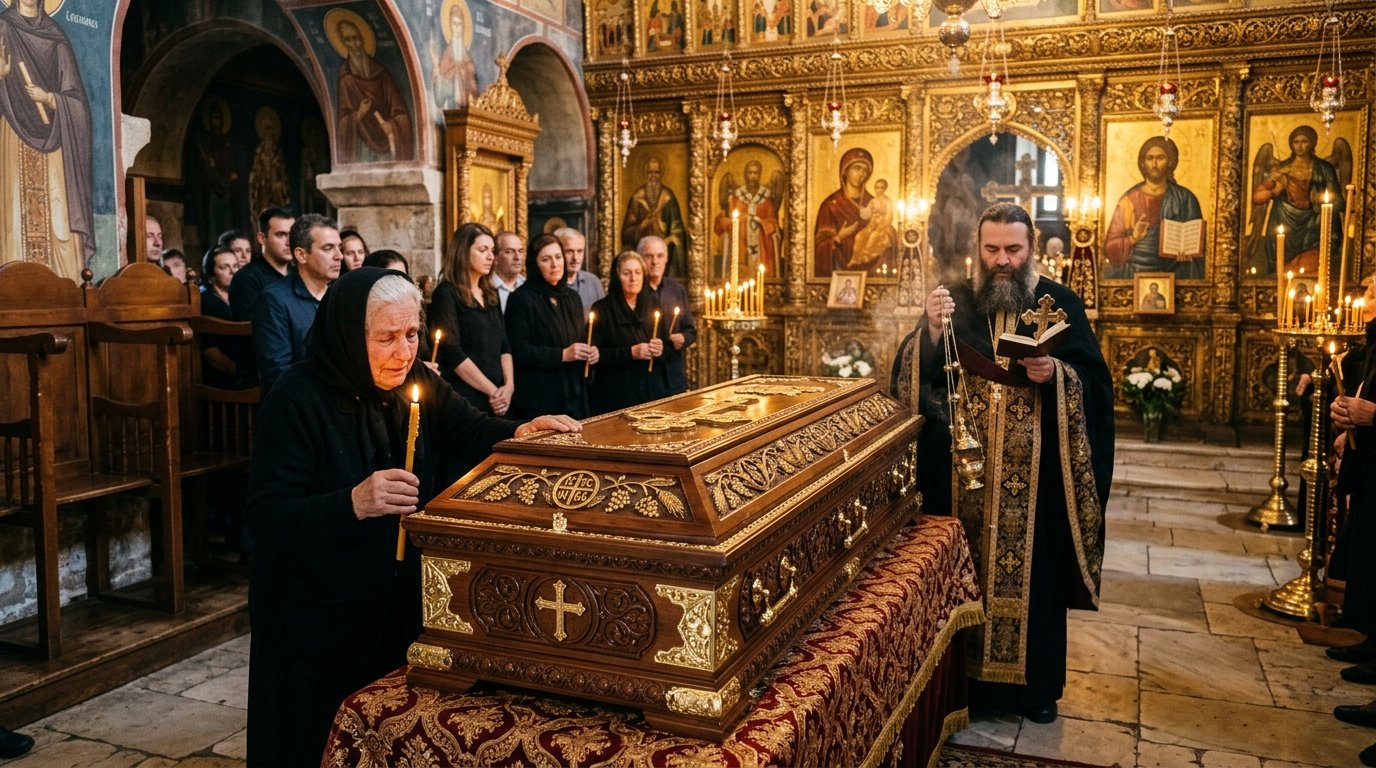
In Eastern Orthodox Christian tradition, death is understood not as a final end, but as a passage into eternal life and a temporary rest awaiting the general resurrection. The burial service (Panikhida or Otpevaniye) is rich in theology, prayer, and symbolism, which directly influences the architecture, materials, and presentation of the casket.
Understanding these liturgical nuances is essential for funeral homes and manufacturers providing specialized options for Orthodox communities worldwide.
1. The Centrality of the Open-Casket Viewing
A defining feature of the Orthodox Christian funeral rite is the open-casket service inside the church:
-
The Final Kiss (Posledneye Tselovaniye): Mourners approach the deceased to pay their respects and offer a final blessing, making the interior quality and upholstery design central to the ceremony.
-
Luxurious Interior Upholstery: Orthodox caskets are traditionally fitted with rich, pleated satin, crepe, or jacquard fabrics. White, ivory, and soft cream linings symbolize baptismal purity, the soul’s innocence, and the peace of the heavenly realm.
-
Embroidered Shrouds and Bands: The interior presentation often accommodates traditional liturgical garments, an embroidered funeral shroud (savano), and a symbolic ribbon (venchik) placed across the forehead.
2. Distinct Structural Silhouettes and Religious Insignias
Orthodox funeral traditions favor specific architectural profiles that distinguish them from standard Western coffins:
-
Octagonal and Flared Shapes: Many traditional Orthodox models feature an octagonal profile (six-sided or eight-sided), with a wide head section tapering down toward the base, symbolizing protective shelter.
-
Orthodox Cross Emblems: Casket lids are frequently adorned with the authentic Eastern Orthodox Cross (the distinctive three-bar cross, featuring the upper title bar and the slanted footrest), crafted from polished brass, copper sheet, or carved hardwood inlays.
-
Liturgical Accents: Exterior finishes often incorporate noble tones—such as warm walnut, deep burgundy, polished oak, or royal purple—reflecting theological honor and solemn dignity.
3. Earth Burial Over Cremation
The Eastern Orthodox Church maintains a strict theological reverence for the physical body as a temple of the Holy Spirit:
-
Earth Burial Standard: Traditional in-ground burial is the universal canonical standard, requiring coffins engineered with high structural load-bearing capacity and durable, natural timbers.
-
Solid Hardwoods: High-density hardwoods like Oak, Hornbeam, Chestnut, and Walnut are strongly preferred for their permanence, structural resilience, and natural grain.
-
Biodegradable and Natural Construction: Because returning the body to the earth is a sacred obligation, eco-conscious joinery and non-toxic finishes align naturally with traditional Orthodox theology.
4. Cross-Border Repatriation for Global Communities
Due to the diaspora of Orthodox communities across Europe, North America, and the Mediterranean, families often request cross-border transit to home countries:
-
Zinc-Lined Transport Chambers: Transit models outfitted with hermetically sealed zinc liners (çinkomed) or soldered copper casings ensure full compliance with international IATA air transport regulations while preserving the casket’s exterior beauty for church services upon arrival.
Orthodox coffin manufacturing represents a thoughtful union of liturgical art, sacred symbolism, and structural permanence—providing families with a dignified vessel that honors faith, heritage, and eternal hope.