
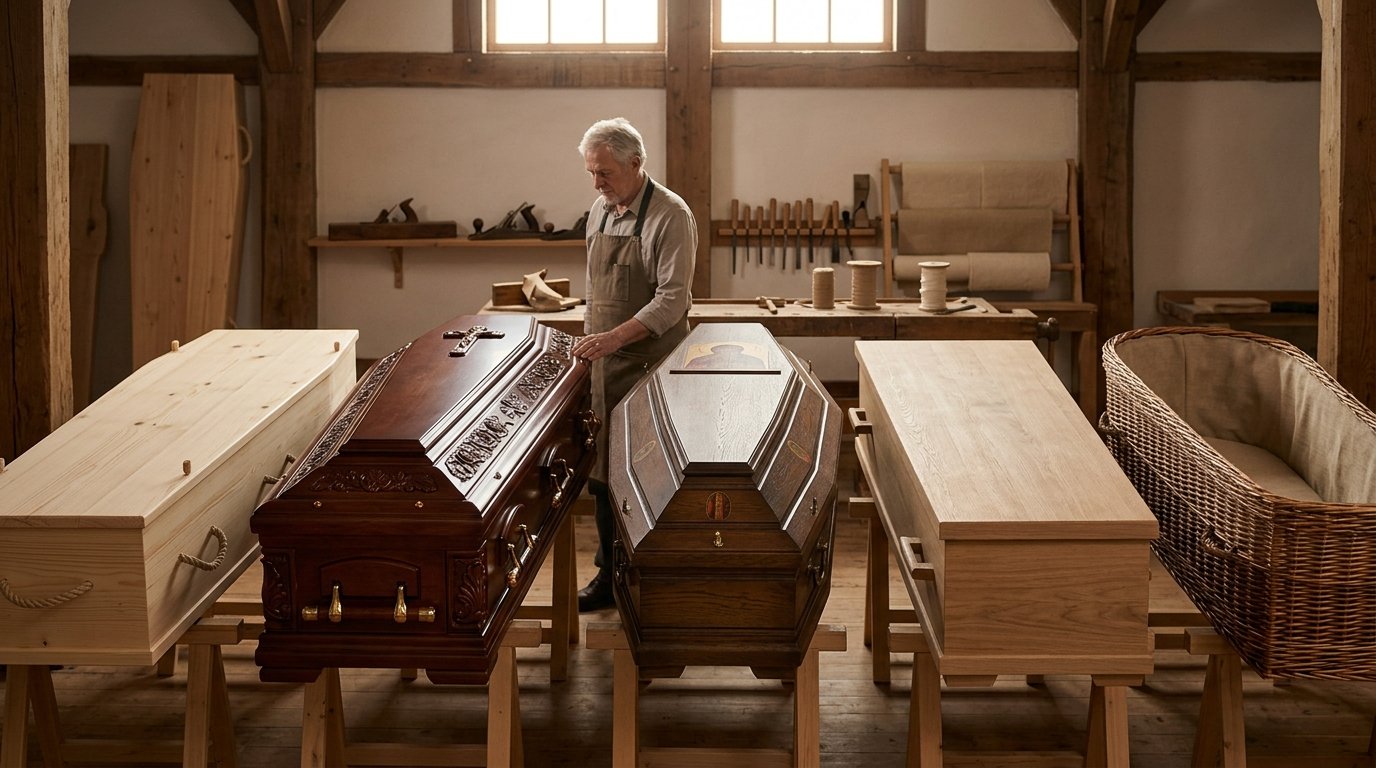
Europe is a rich tapestry of distinct cultural, religious, and regional traditions. From the Catholic heartlands of Southern Europe to the Protestant and secular landscapes of the North, beliefs about the afterlife deeply influence funeral customs and coffin design across the continent.
For funeral directors, distributors, and manufacturers, navigating this diverse market requires an understanding of how regional faith and regional regulations shape coffin preferences.
1. Southern Europe: Catholic Traditions and Enduring Monumentality
In predominantly Catholic nations such as Italy, Spain, and Portugal, traditional earth burial and entombment in family mausoleums or niches (loculi) remain significant customs:
-
Robust Hardwoods: High preference for heavy, solid woods such as chestnut, oak, and walnut, symbolizing permanence, solemnity, and timeless honor.
-
Ornate Religious Elements: Coffins are frequently adorned with carved crucifixes, images of the Virgin Mary, and polished bronze or brass fixtures.
-
Sealed Vault Requirements: Above-ground niche burials often legally mandate hermetically sealed zinc liners (çinkomed) to ensure sanitary safety and compliance with municipal cemetery regulations.
2. Western and Central Europe: Precision, Simplicity, and EN 15017 Standards
In countries like Germany, France, the Netherlands, and Austria, funeral practices reflect a balance of Christian heritage (Catholic and Lutheran), secular preferences, and strict environmental governance:
-
The German & Alpine Style: German (Sarg) designs often feature clean geometric lines, elevated stepped lids, and fine satin or matte finishes in natural oak, beech, or hornbeam.
-
Strict Ecological & Cremation Directives: With high cremation rates in Central Europe, coffins must comply with rigorous clean-air standards. Glues, varnishes, and textiles must be fully REACH-compliant, non-toxic, and free of synthetic plastics or heavy metals.
-
Structural Norms: Strict adherence to EN 15017 funeral service standards governs load capacities, dimensional consistency, and handling stability.
3. Northern Europe & the UK: Understated Elegance and Eco-Consciousness
In the Nordic countries and the United Kingdom, Protestant heritage and a strong connection to nature have fostered a minimalist, nature-centered approach:
-
Minimalist Aesthetics: Light-toned natural timbers—such as natural oak, pine, and birch—with unadorned surfaces reflect Scandinavian and British understated elegance.
-
Green and Woodland Burials: Strong demand for 100% biodegradable coffins crafted with unbleached natural cotton linings and combustible wooden fasteners, facilitating natural return to the earth.
4. Eastern Europe: Orthodox Traditions and Ceremonial Openings
Across Eastern European countries with strong Eastern Orthodox roots (such as Greece, Romania, and Bulgaria):
-
Open-Casket Ceremonies: Orthodox funeral rites traditionally feature an open-casket service in the church, placing immense importance on the visual luxury of the interior upholstery—such as pleated satin, embroidered headrests, and lace trimmings.
-
Octagonal and Flared Silhouettes: Traditional Orthodox caskets often feature distinctive octagonal profiles and flared shoulder contours crafted from rich mahogany- or cherry-stained hardwoods.
Meeting Continental Demands
Serving the European funeral sector requires manufacturing versatility—from zinc-sealed hardwood caskets engineered for Southern European vaults to eco-certified combustible coffins tailored for Northern crematoriums. Aligning master craftsmanship with localized traditions and European compliance ensures every farewell is conducted with dignity, respect, and structural integrity.